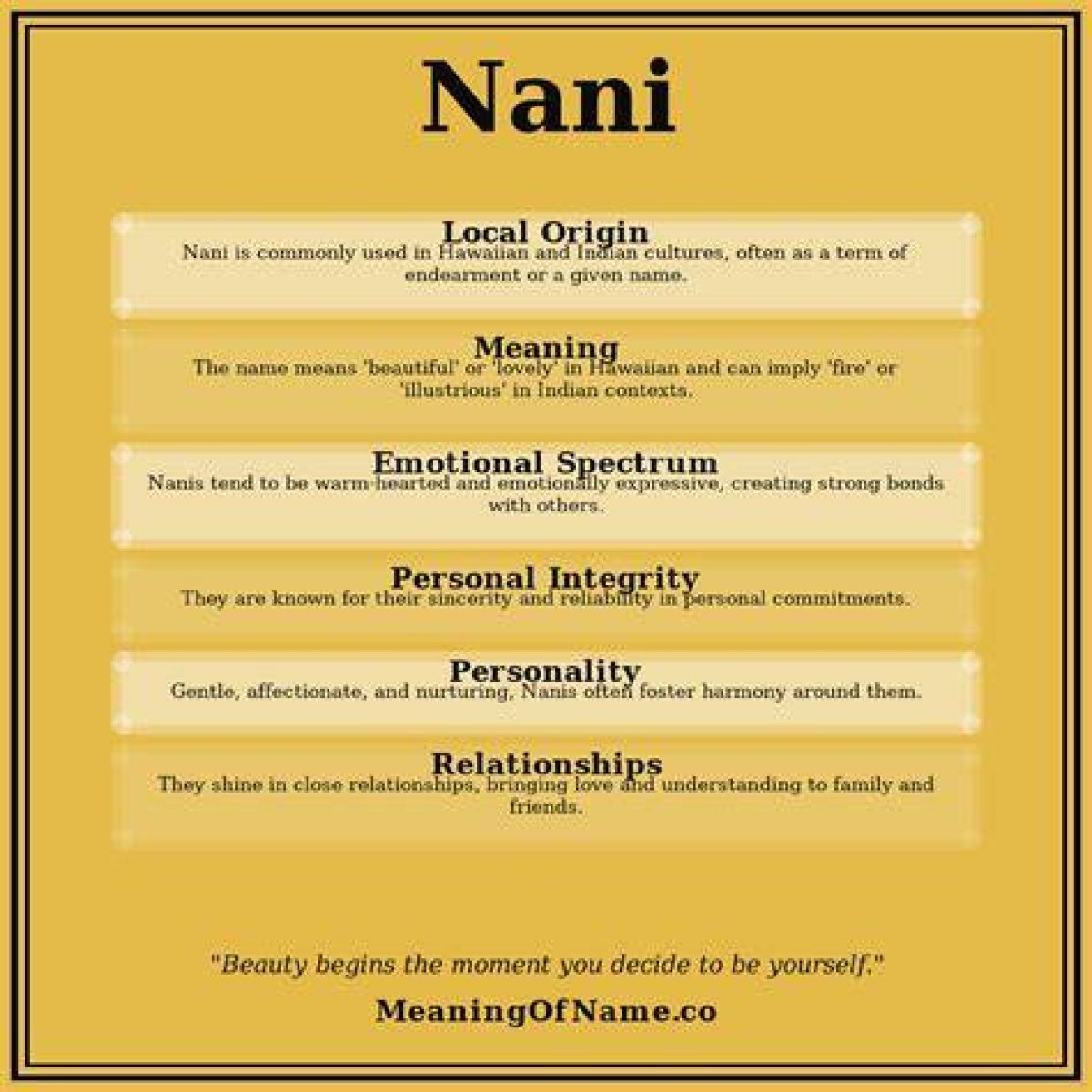
Nani meaning has captivated the minds of many, drawing curiosity from diverse backgrounds. The term "nani" carries different connotations across various cultures, especially in Japanese and Hawaiian contexts. This article aims to delve deeply into the meaning, origin, and cultural significance of "nani," exploring its various uses and interpretations.
Throughout this article, we will explore the different aspects of "nani," including its linguistic roots, cultural relevance, and how it resonates with different communities. We will also address its broader implications in language and culture, providing insights that can enrich your understanding of this fascinating term.
Whether you are a language enthusiast, a cultural explorer, or simply curious about the term "nani," this comprehensive guide will offer valuable insights. Join us as we unravel the multifaceted meanings and significance behind "nani."
1. The Linguistic Roots of Nani
The term "nani" has its roots in different languages, primarily Japanese and Hawaiian. In Japanese, "nani" (何) translates to "what," used in various contexts to inquire about something. This simple yet profound term plays a crucial role in daily conversations and expressions.
In Hawaiian culture, "nani" means "beautiful" or "splendid." It reflects the natural beauty of the Hawaiian Islands, often used to describe landscapes, people, and experiences. The dual meanings of "nani" across cultures highlight the richness of language and the way words can shape our understanding of the world.
2. Nani in Japanese Culture
In Japanese culture, the word "nani" is often used in everyday conversations. It serves as a fundamental interrogative word, allowing speakers to ask questions and seek clarification. For example, one might say, "Nani ga arimasu ka?" (What do you have?).
2.1 Common Phrases Using Nani
- Nani desu ka? (What is it?)
- Nani o shiteimasu ka? (What are you doing?)
- Nani ga suki desu ka? (What do you like?)
The frequent use of "nani" in Japanese conversations showcases its importance in communication, facilitating dialogue and understanding.

